
Brewing
Brewing through Bangkok's seasons
Bangkok's heat and humidity shape every batch we brew. Here is how we adapt.

Nitrogen gas transforms a stout in ways that CO₂ simply cannot. Where carbon dioxide produces large, sharp bubbles and a crisp bite, nitrogen creates a cascade of tiny, almost invisible bubbles that rise slowly and settle into a dense, creamy head.
The result is a beer that feels silky and full in the mouth — softer on the palate, with a finish that lingers rather than fades. It is the same beer, but experienced completely differently.
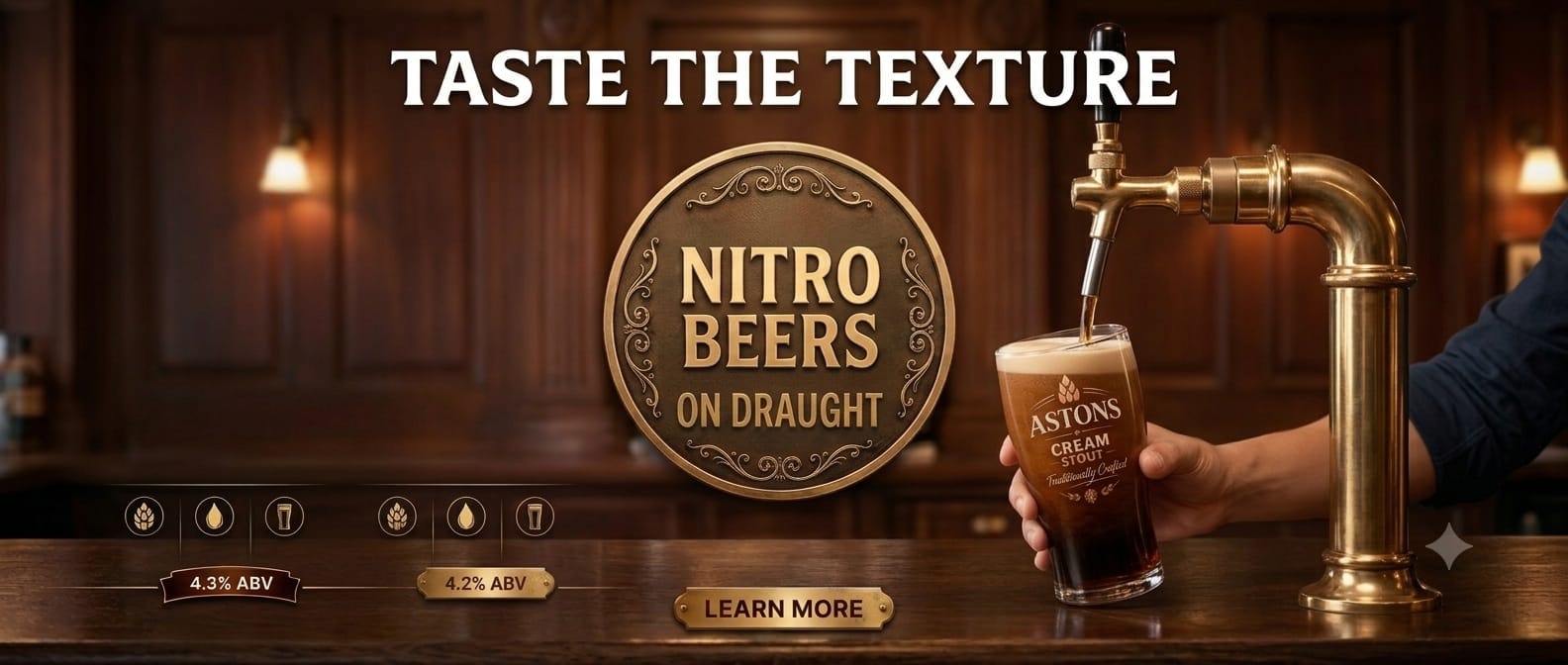
The Astons nitro tap — where the cascade begins.
Getting nitro right takes more equipment, more care, and more patience. The gas blend, the serving pressure, the temperature of the line — every variable matters.
When a nitro beer is poured, the drop in pressure causes the dissolved nitrogen to come out of solution in a rush of tiny bubbles. These bubbles are so small they appear as a creamy white wave cascading down the glass.
"The cascade is not just visual — it changes the entire texture of the beer. That difference is everything."
— The Astons brewing team
The cascade settles over thirty to sixty seconds, leaving a dense, persistent head that clings to the glass as you drink.
This is not just aesthetics. The head traps aromatic compounds and delivers them to your nose with every sip, intensifying the flavour experience.
We think the wait is worth it. Good things take time.
The mouthfeel of a nitro beer is its defining characteristic. Where a CO₂ beer has a sharp, prickly carbonation, a nitro beer is smooth and almost creamy — closer to a milkshake than a sparkling water.

A perfectly poured Astons Nitro Stout.
70% N₂ / 30% CO₂
The standard nitro blend for stouts and creamflow ales.
30–35 psi
Higher than CO₂ to push the beer through the restrictor plate.
6–8°C
Slightly warmer than a lager to let the flavour open up.
The tap itself is the final variable. A nitro tap uses a restrictor plate — a disc with tiny holes — to agitate the beer as it flows through, triggering the cascade.
The angle of the pour matters too. A nitro stout should be poured at 45 degrees, then straightened as the glass fills. This maximises the cascade and produces the best head.
"We condition every batch for the full time it needs. Not a day less. That patience is what you taste in the glass."
— The Astons brewing team
Come in and try it. You will understand why we think it is worth the effort.
Bangkok's heat and humidity shape every batch we brew. Here is how we adapt.

A taproom should feel like a place you want to linger. We think about that every day.
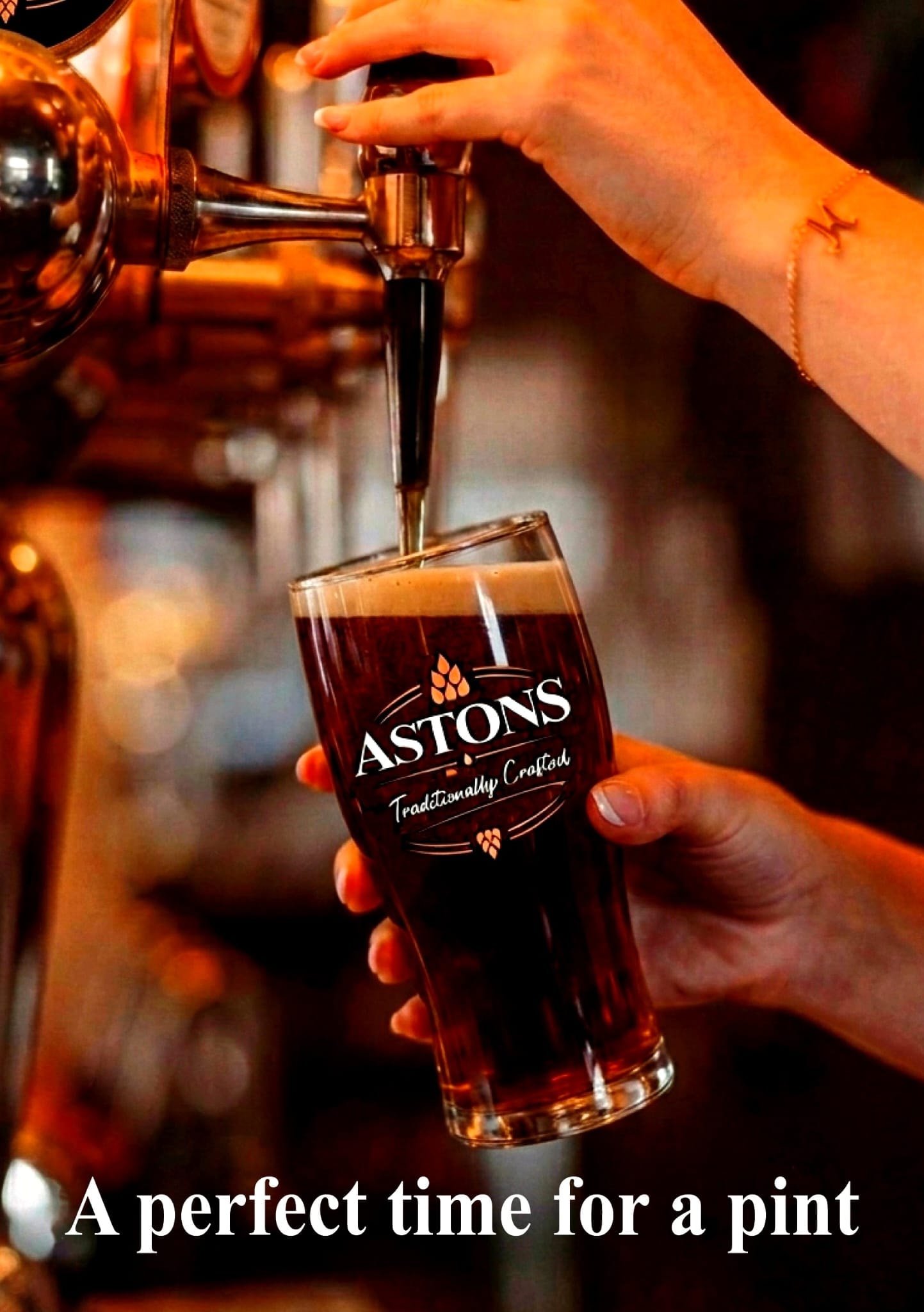
The malt bill is the foundation of every beer. Getting it right takes time and attention.